

 Deutschland | €
 United Kingdom | £
 Italy | €
 Polska | zł
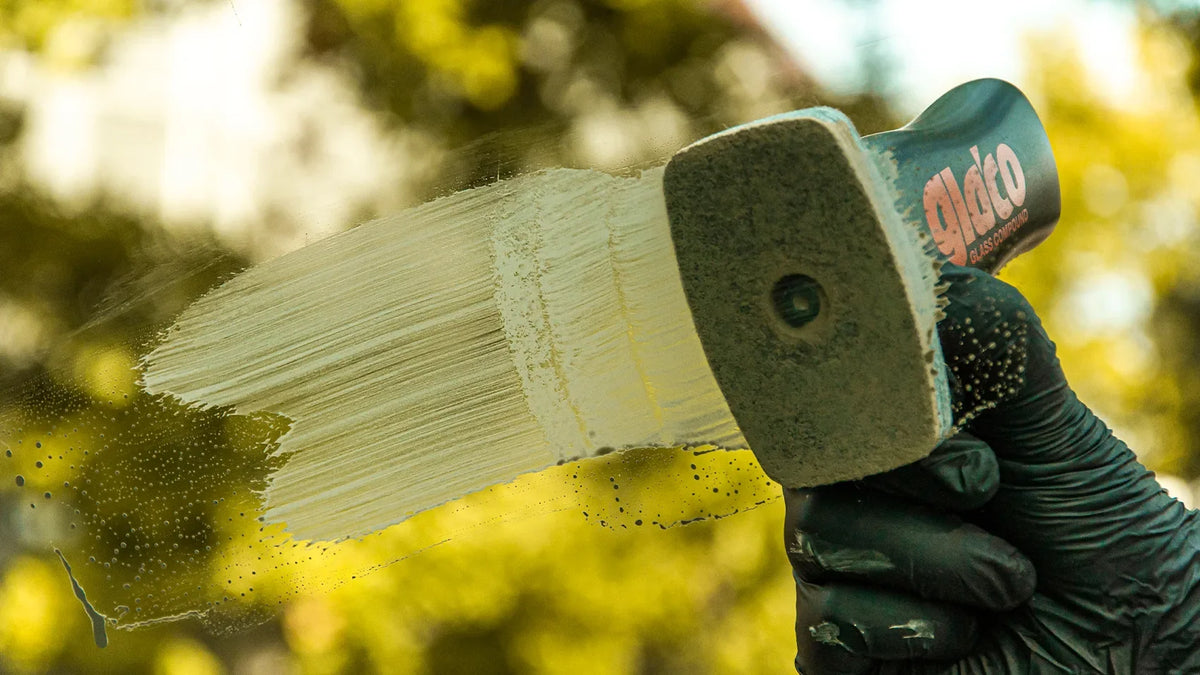
Many people will say that a clean windscreen is simply a washed windscreen. And it's hard to argue with that – but as is so often the case in detailing, the devil is in the details, and certain tasks are only simple on the surface. It's time to look at how to properly prepare your glass before applying a Glaco hydrophobic coating.
Preparing glass properly requires some knowledge and the right products – skipping this stage will complicate the Glaco application and affect the durability of the coating. Find out which mistakes to avoid.
Glass is smooth, but only to the touch
First, a little essential theory. Glass, although it appears completely smooth, has a porous structure – under a microscope, you'd see that its seemingly flat surface is covered with thousands of microscopic indentations.
As you drive, everything the glass comes into contact with settles into those indentations (pores): oily road film, particles from exhaust fumes and brake pads from vehicles ahead, limescale, tree sap, and residues from old coatings and screenwash fluid. Washing with a cleaning fluid or shampoo will only remove surface dirt, while everything else sits quietly on in the structure of the glass. So what can you do to clean glass thoroughly?
1. Remove loose dirt
Washing with shampoo is essential to remove the surface layer of dirt – such as sand and other particles that could scratch the glass in the steps that follow. Wash the glass just as you would the paintwork, then rinse away any residue under pressure.

Use a car shampoo (QJUTSU Creamy Shampoo, pictured, is perfect for this) and a soft wash mitt or sponge. Don't scrub too hard – it's better to repeat the washing process twice. Our suggestion? Leave the glass slightly damp; a little water will come in handy in the next step.
2. Reach for a specialist glass cleaning compound
You have two options to choose from: Glaco Compound Roll On or Glass Compound Z. They differ in their applicator. The first has an integrated felt applicator, while the second comes with a separate foam applicator. The latter makes it easier to reach hard-to-access areas – and that's essentially the only significant difference.

3. Work thoroughly, but with a light touch
Both products have abrasive properties, so a little effort is needed to make the most of them. Work with a measured touch, pressing the applicator gently against the glass surface. Circular or linear strokes are both fine. Any moisture left from the wash will now provide additional lubrication and slow the product from drying out. How long should you work? Until you notice that the product is no longer "running away" from under the applicator. Each stroke should leave an even trail of product.

4. Don't delay removing the residue
Don't allow the product to dry completely – remove the residue with pressurised water. If pressure alone isn't sufficient, you can loosen any stubborn remnants with your hand or a clean microfibre cloth. Check that any residue hasn't strayed onto adjacent surfaces.

Pay close attention to how water runs off a properly cleaned glass surface. If water disappears quickly at any point, leaving small droplets behind, this most likely indicates contamination still lurking in that spot – such as limescale, dried screenwash residue, or road deposits. If, on the other hand, you can see streams and a smooth sheet of water flowing away in even waves, that's the clearest sign that the glass has been thoroughly cleaned and degreased!

5. Dry off and you're done!
The final step is a formality. Dry the glass thoroughly with an absorbent microfibre cloth – for example, the Format Cloth (with 4 hand pockets) from our range. You can now be confident that the glass is deeply clean and that Glaco will bond with maximum strength. There's no need to degrease with alcohol or any other product – our Glass Compound has already done that job.

Summary
Summer is slowly drawing to a close across Europe, and with it the drier part of the year. The autumn rains are unavoidable, but we can prepare for them well – all the more so because, with the days getting shorter, visibility will matter more than ever. Apply Glaco and drive safely!