

 Deutschland | €
 United Kingdom | £
 Italy | €
 Polska | zł
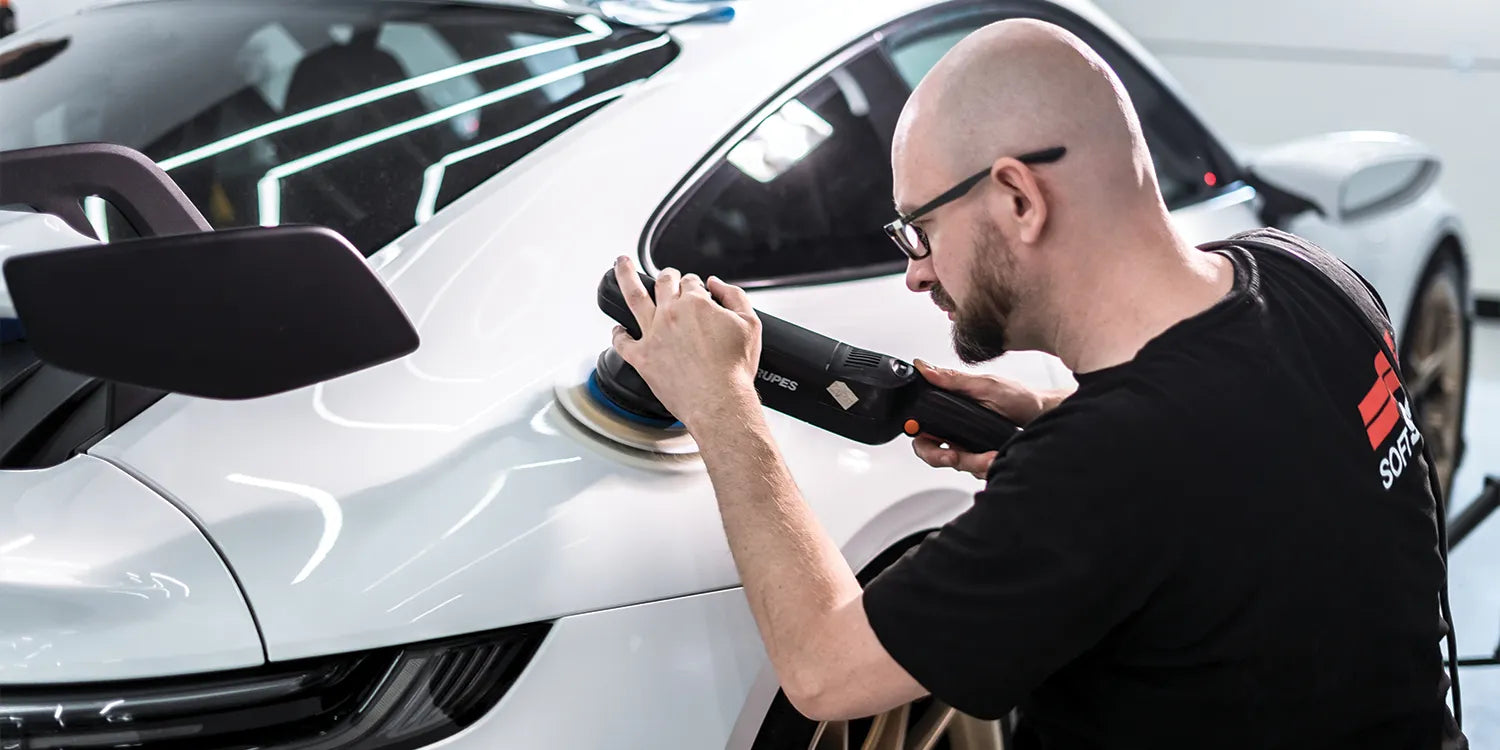
Sometimes, before applying a wax or coating, the paintwork should be polished. This is not an easy task – one that could fill an entire book. Here’s a quick introduction to the world of paint polishing: how to get started and what’s worth knowing about the process.
Polishing is often considered the advanced level of car care. This broad category includes topics such as power tools, selecting compounds and polishing pads, and even elements of paintwork knowledge. The sheer number of aspects can feel overwhelming.
That’s why, to begin with, let’s stay within the realm of car detailing and explore the basic stages of paint correction – the precise process of improving a vehicle’s paint condition. We’ll cover cutting, polishing, and finishing.
When starting with polishing, you’ll also need to choose a machine, compound, and polishing pad. Tailor your choices to your preferences, as well as the types of vehicles and paints you’ll be working on. Not sure what to pick? Consider signing up for a polishing machine course or simply ask for advice at your nearest detailing store.
Polishing machine – rotary vs Dual Action
A polishing machine is the primary tool in paint correction, and your choice has a major impact on the results.
The most classic option is the rotary machine, which performs a consistent rotational movement around a single axis. This generates strong cutting power, making it highly effective at removing deep scratches. However, it requires experience – there’s a risk of overheating the paint or creating holograms, which are circular marks visible in reflected light caused by improper polishing.

An alternative is the Dual Action (DA) machine, which combines rotational and oscillating movement. This more complex motion significantly reduces the risk of damage, making the process safer and more predictable, though usually with slightly less cutting power. Dual Action is a great choice for beginners and finishing work, while rotary machines are more often used by professionals, especially on heavily damaged paint.
Polishing compounds
Cutting
The first stage of paint polishing is cutting, which aims to remove deeper surface defects such as scratches, marks from automatic car washes, or oxidised paint layers.

Recommended compound: Soft99 Cutting Compound
At this stage, the most aggressive combinations are used: firmer pads and more abrasive compounds. It’s crucial to control temperature and paint thickness, as overly aggressive work can remove too much material. A well-executed cutting stage prepares the surface for further steps, levelling the paint structure and restoring a uniform appearance.
Polishing
The second stage is polishing, which removes micro-scratches and holograms left after cutting. Medium-abrasive compounds and softer pads are used to smooth the paint and begin enhancing its depth and gloss.

Recommended compound: Soft99 Polishing Compound
Technique becomes just as important as tool selection – consistent passes, proper pressure, and speed control all have a major impact on the final result. This is the stage where the paint starts to look “alive” again and regains its aesthetic appeal.
Finishing
The final step is finishing, focused on maximising gloss and achieving a mirror-like effect. Very soft pads and low-abrasion finishing compounds are used to eliminate the finest imperfections visible under strong light.

Recommended compound: Soft99 Finishing Compound
This stage is all about refinement – calm, precise work, careful panel wiping, and checking results from different angles determine a professional finish. After proper finishing, the paint is perfectly prepared for protection with wax, sealant, or a ceramic coating, helping maintain the achieved effect for longer.
Polishing pads – materials and properties
Polishing pads are the element that comes into direct contact with the paint, so their properties are crucial to the entire process.
The most common types are foam, microfibre, and wool pads – each behaves differently. Foam pads come in various hardness levels: from aggressive (hard), through medium, to very soft finishing pads, and they tend to distribute heat relatively evenly.
Microfibre pads offer greater cutting power due to their structure but generate more heat and require more frequent cleaning during use.
Wool pads, on the other hand, provide very strong cutting ability and good heat dissipation, but they may leave more marks that require further polishing.
Another important factor is heat management – overheating can affect both effectiveness and paint safety. Choosing the right pad is always a balance between cutting power, temperature control, and finish quality, which is why in practice multiple pad types are often used across different stages.
Summary: how to not mess up polishing?
This blog post is only a starting point, as paint polishing is a very extensive topic. Improper polishing can damage the paint and lead to costly repainting, so if you’re unsure, it’s better to invest in a professional detailing course before buying your own machine and pads.
The knowledge you gain will pay off every time you want to protect your car, prepare it for sale, or simply remove oxidation, scratches, and signs of wear from the paint.